Poesis: Greek for poetry, to make up
Logos: truth
-Mythos + Logos = mythology (when story and truth get together)
Wizard of Oz: "It is more important to be loved than to love."
-"Pay no attention to that man behind the curtain."
Parents of Love: Poros (aka Contrivance) is the father and Poverty is the mother
The soul can give birth
-The Odyssey and the Iliad are the immortal children of the soul of Homer
The only ones worthy of love are philosophers.
Tragedy: pessimism
Comedy: give me more life-even shameful life
Tuesday, March 20, 2007

March 2
 As always, read Elizabeth's blog - it is truly a marvel!
In the Symposium, we are to make a change, Professor Sexson prefers "each of us is the mere broken tally of a man."
- a tally was a Roman coin (you used to be able to break them easily)
Blank slates vs. traces of memory (an almost remembrance) is the theme of many current movies such as, Made in Heaven, Eternal Sunshine of the Spotless Mind
Silenus Statue: ugly on the outside, but you break it open and there are beautiful things inside of it
The Innocence, is a movie by Truman Capote based on the book, A Turn of the Screw-the subject matter of the story is stories.
The connection between love (desire for wholeness) and imagination is explored in the short story "A Tree, A Rock, A Cloud."
February 28
What is Love?
-philia is anonther form of love
-sophia means wisdom
--philosopy: the love of wisdom
-The pursuit of knowledge can be erotic (rhetoric -> erotic)
In the Symposium the love is homoerotic, pedophilia
-Between a lover and a beloved
-The lover (erastes) is an old man and the beloved (eromenos) is a boy
--On the physical level, Socrates is the erastes and Alcibiades is the eromenos
--But on the spiritual level, the roles are reversed.
-Women were inferior, they wanted to have a connection of equals
At this time, Dr. Sexson finished the story about the "Scheherazade of the Airways."
-Something was said, something was done, something was shown
-Said: "I just wanted to please you."
-Done: Gave him a package.
-Shown: A series of numerals on her left forearm.
-What a great story!
-philia is anonther form of love
-sophia means wisdom
--philosopy: the love of wisdom
-The pursuit of knowledge can be erotic (rhetoric -> erotic)
In the Symposium the love is homoerotic, pedophilia
-Between a lover and a beloved
-The lover (erastes) is an old man and the beloved (eromenos) is a boy
--On the physical level, Socrates is the erastes and Alcibiades is the eromenos
--But on the spiritual level, the roles are reversed.
-Women were inferior, they wanted to have a connection of equals
At this time, Dr. Sexson finished the story about the "Scheherazade of the Airways."
-Something was said, something was done, something was shown
-Said: "I just wanted to please you."
-Done: Gave him a package.
-Shown: A series of numerals on her left forearm.
-What a great story!
February 26
"All we do is simply imitate the gods and goddess."
Socratic Irony: saying you don't know anything when in fact you know a great deal
Symposium: patriarchal
-Before the men could talk about the subject of live, they had to send out the flute girls
We don't even know if the Symposium actually happened because it comes to us through secondary sources of secondary sources
-Plato used the allegory of a cave: fire produces shadows, etc--bottom line: viewing things that aren't real, like watching movies
-Plato creates a blur between literary and philosophy
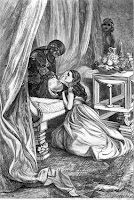 At this point in the class, Dr. Sexson began to weave the most fascinating story about a raconteur (storyteller), the Scheherazade of the Airways and the stories that she told him about her time in a concentration camp. Telling stories was her specialty.
-You really needed to be there for this one but:
-She told the story of "The Beggar King"
-The German officer's name was Konig (which means king)
-Upon landing, she washed the "tattoos" off her arm and said it was all a story
Socratic Irony: saying you don't know anything when in fact you know a great deal
Symposium: patriarchal
-Before the men could talk about the subject of live, they had to send out the flute girls
We don't even know if the Symposium actually happened because it comes to us through secondary sources of secondary sources
-Plato used the allegory of a cave: fire produces shadows, etc--bottom line: viewing things that aren't real, like watching movies
-Plato creates a blur between literary and philosophy
 At this point in the class, Dr. Sexson began to weave the most fascinating story about a raconteur (storyteller), the Scheherazade of the Airways and the stories that she told him about her time in a concentration camp. Telling stories was her specialty.
-You really needed to be there for this one but:
-She told the story of "The Beggar King"
-The German officer's name was Konig (which means king)
-Upon landing, she washed the "tattoos" off her arm and said it was all a story

February 21
Check Elizabeth, Brittni, Amanda, and Jann's blogs for review lists and class notes.
Quiz Review:
1. What did Demeter do in revenge of the abduction of Persephone?
- made it winter
2. What is a senex?
- a doddering old fool
3. What are 3 manifestations of the universal goddess?
- crone (Hecate), mother (Demeter), and maiden (Persephone)
4. What is a puer?
- the archetype of eternal youth
5. The reason I couldn't have stolen your cattle.
- "I was born yesterday."
6. What sacrifice did Agamemnon have to make to go to the Trojan War?
- his own virgin daughter
7. What is the heart of tragedy according to Sophocles?
- "The best thing that can happen is to never have been born at all."
8. Define sparagmos.
- tearing or rending of living flesh
9. What does Kore mean?
- maiden, Persephone
10. Birth of Dionysus.
- he of the double doors, born out of Zeus's thigh
11. What is stichomythia?
- a short exchange between agnostic combatants in a drama
12. The five conflicts in Antigone are?
- young v. old, man v. woman, living v. dead, mortal v. god(s), and individual v. society
13. Aphrodite Urania was the goddess of what?
- spiritual love, pure love
14. What was shown at the E. Mysteries?
- stalk of wheat
15. Definition of Antigone's name.
- against birth
16. What is hubris?
- pride or arrogance
17. In ancient Greece, who do you invoke?
- the 9 muses
18. What was the title of the 1st song according to Dr. Sexson?
- "Stairway to Heaven"
19. Define chthonic.
- relating to the underworld
20. What did Persephone eat while she was in the underworld?
- pomegranate seed
21. What did Tiresias experience?
- life as a male and female
22. Who was the father of the Muses?
- Zeus
23. What is catharsis?
- purgation of self
24. Who was Jocasta?
- Antigone's mother and grandmother
25. What is the Greek word for city?
- polis
26. When and where was Cassi born?
- February 2, 1987 in GrandJunction, CO
27. Is it time to go?
- "Yes, it's 2:03"
Quiz Review:
1. What did Demeter do in revenge of the abduction of Persephone?
- made it winter
2. What is a senex?
- a doddering old fool
3. What are 3 manifestations of the universal goddess?
- crone (Hecate), mother (Demeter), and maiden (Persephone)
4. What is a puer?
- the archetype of eternal youth
5. The reason I couldn't have stolen your cattle.
- "I was born yesterday."
6. What sacrifice did Agamemnon have to make to go to the Trojan War?
- his own virgin daughter
7. What is the heart of tragedy according to Sophocles?
- "The best thing that can happen is to never have been born at all."
8. Define sparagmos.
- tearing or rending of living flesh
9. What does Kore mean?
- maiden, Persephone
10. Birth of Dionysus.
- he of the double doors, born out of Zeus's thigh
11. What is stichomythia?
- a short exchange between agnostic combatants in a drama
12. The five conflicts in Antigone are?
- young v. old, man v. woman, living v. dead, mortal v. god(s), and individual v. society
13. Aphrodite Urania was the goddess of what?
- spiritual love, pure love
14. What was shown at the E. Mysteries?
- stalk of wheat
15. Definition of Antigone's name.
- against birth
16. What is hubris?
- pride or arrogance
17. In ancient Greece, who do you invoke?
- the 9 muses
18. What was the title of the 1st song according to Dr. Sexson?
- "Stairway to Heaven"
19. Define chthonic.
- relating to the underworld
20. What did Persephone eat while she was in the underworld?
- pomegranate seed
21. What did Tiresias experience?
- life as a male and female
22. Who was the father of the Muses?
- Zeus
23. What is catharsis?
- purgation of self
24. Who was Jocasta?
- Antigone's mother and grandmother
25. What is the Greek word for city?
- polis
26. When and where was Cassi born?
- February 2, 1987 in GrandJunction, CO
27. Is it time to go?
- "Yes, it's 2:03"

Sunday, February 18, 2007
February 16
 Mythos of Antigone vs. Drama of Sophocles
-the story everybody knew vs. the artistic version
-the original or true version can never be determined
Catharsis: the purgation of pity and fear, cleansing of the system
Tiresias: could see things beyond his blindness
-saw the world beyond the scope of a man or a woman
-said Narcissus would live a long time, but only if he never knew himself
The messenger in Greek tragedy: no good news, describes incredible graphic violence.
Saturday, February 17, 2007
February 14
 What is love? Well, if we could ask Aphrodite Uranos she would say that love was the pure, platonic, intellectual connection between two people's souls. But, if we asked Aphrodite Pandemos she would give us a very different description. She would say love was physical, passionate would make you "weak in the knees." Aphrodite Pandemos would also want to be honored with ritual prostitution.
Imagination is the power to give the unliving flesh and blood.
"The generation of men are the generation of leaves."
-the First Noble Truth: All is suffering.
-"It is best never to have been born at all, next best to die young, and that old age is the worst that can befall man."
Friday, February 16, 2007
February 12
 Courtesan: a high-class prostitute or mistress; a tragic, and sometimes mysterious figure, who is linked to powerful, rich influential men; these women are often ostracized and made to be a comedic figure
-a figure that is being lost in today's world
Some famous courtesans:
-Manon
-Violetta
-Odette
-Cleopatra
-Marilyn Monroe
-Anna Nicole Smith
Why should we be so possessed by these people?
-What is it that makes an icon?
The failure of understanding between men and women is older than drama.
-The Pinchie Scorner was acted out by Elizabeth and Sutter
--"Life has imitated art."
-Fogs do not actually exist, they only exist because the artists created them.
Our assignment: Imitate art. (preferably legally)
Two blogs about a Steiner page to look at are Amy's and Brittany's.
-Screed: a long discourse or essay
-Genius: a spirit inside of you; when you invoke your own genius, it brings out the best in you
--Therefore, I'm a genius (and so are you!)
Error in Steiner's Antigones, page 235: Cleopatra did not say "mortal coil" (that was Hamlet) she said "knot intrinsicate."
-Yea! Steiner actually makes mistakes too!

Antigones, page 109: "the Antigone gesture is made"
Our assignment: Make an Antigone gesture.
Archaic: exceedingly old; page 36 of Antigone references the story of Niobe (see page 188 of Metamorphoses)
-Niobe was turned to stone, and that stone still weeps today.
Thursday, February 15, 2007
February 9
How will you do something in order to make it memorable for others?
-We have all been given the assignment of doing the aforementioned.
Brian's hamster, Squeals was scared to death by his uncle.
Stichomythia: rows of speech
The Players: Starring Elizabeth as the young, spunky, volatile, and completely unpredictable Antigone, Megan as the passionate, but not gutsy Ismene, and Mick as the old, unbending ruler Creon, and featuring Professor Sexson as the Chorus of old, wise men.
 The Play: Lines 1-48 and lines 497-581 were eloquently recited in class.
The works of Aeschylus mark the birth of the great Greek tragedies. Sophocles sits at the zenith, and Euripides sits at the end of the falling action (his plays are sometimes described as loose, untranslatable, and disjointed, but passionate)
The Oresteia: by Aeschylus, describes the familial drama in the House of Atreus, or the story of Agamemnon
Enthusiastic: en-theos: the gods are inside
Assignments:
-Read pages 234 and 303 in Steiner about the roots of our dialogue.
-Blog about a misunderstanding over language between men and women.
-We have all been given the assignment of doing the aforementioned.
Brian's hamster, Squeals was scared to death by his uncle.
Stichomythia: rows of speech
The Players: Starring Elizabeth as the young, spunky, volatile, and completely unpredictable Antigone, Megan as the passionate, but not gutsy Ismene, and Mick as the old, unbending ruler Creon, and featuring Professor Sexson as the Chorus of old, wise men.
The Play: Lines 1-48 and lines 497-581 were eloquently recited in class.The works of Aeschylus mark the birth of the great Greek tragedies. Sophocles sits at the zenith, and Euripides sits at the end of the falling action (his plays are sometimes described as loose, untranslatable, and disjointed, but passionate)
The Oresteia: by Aeschylus, describes the familial drama in the House of Atreus, or the story of Agamemnon
Enthusiastic: en-theos: the gods are inside
Assignments:
-Read pages 234 and 303 in Steiner about the roots of our dialogue.
-Blog about a misunderstanding over language between men and women.
February 7
Assignments:
-Read and respond to a classmate's blog.
-Find one page in Steiner and do a close reading of it. Then, blog about it.
-Choose one of the five conflicts in Antigone that interests you.
Georg Wielhelm Friederich Hegel: a German philosopher that wrote about and was fascinated by Antigone
-Antigones page 40: Hegel puts Antigone above Socrates and Jesus
--Soren Kierkegaard: "the 2nd most solemn Dane" found this blasphemous
-Other odd obsessions: Charles Dickens was obsessed with Little Red Riding Hood
-Q: Why would grown men be so intrigued with unreal women?
-Carly's page has a link to an explanation of Hegel's interpretation of Antigone
 Mythos: storyA woman was arrested for murdering her husband with a meat cleaver.
-Read and respond to a classmate's blog.
-Find one page in Steiner and do a close reading of it. Then, blog about it.
-Choose one of the five conflicts in Antigone that interests you.


Georg Wielhelm Friederich Hegel: a German philosopher that

 wrote about and was fascinated by Antigone
-Antigones page 40: Hegel puts Antigone above Socrates and Jesus
--Soren Kierkegaard: "the 2nd most solemn Dane" found this blasphemous
-Other odd obsessions: Charles Dickens was obsessed with Little Red Riding Hood
-Q: Why would grown men be so intrigued with unreal women?
-Carly's page has a link to an explanation of Hegel's interpretation of Antigone
Antigones page 18: discusses the Gothic fascination with entombment and people's fear of being buried alive
-On a side note: hysteria: originally meant that a woman's womb had come loose and went wandering through the body
Five areas of conflict in Antigone (and page numbers in Steiner):
-man v. woman (234)
-young v. old (242)
-living v. dead (263)
-individual v. society (247)
-men v. god(s) (266)
 Mythos: story
-They ended up letting her off because she could tell a good story
-She could tell a good story to save her life!
-Other times this theme comes up: The Book of One Thousand and One Nights better known in our culture as Arabian Nights

Tragedy: "It's all in the family"
-Europa should have known to watch out for Zeus because of what had happened to Io--However, she allowed herself to be abducted by a bull (Zeus)
-The moral of the story: learn from the past or you will be destined to repeat it.
Sunday, February 11, 2007
February 5
 "All women are maiden and mother."
Sparagmos: tearing or rending of living flesh
-Dionysian ritual
-happens in "Bacchae"
Hymn to Hermes: he was born yesterday
-polytropic: line 13, like Odysseus, but in this case wily, trickster, shrewd
-the story of how an outsider (Hermes) became an insider (member of the Pantheon) through trickery and justice
Zeus's job is to produce offspring that have some claim to divinity.
-"The lightening bolt pilots all things."
Metamorphosis: theme in "to Hermes"
-"But dying you'll make one terrific singer (no music existed in the world before Hermes)
--The first song was in praise of the birth of the gods
-Metempsychosis: the transmigration of the soul from one body to another, a reincarnation of sorts
.jpg) Story of Pygmalion: a sculptor who fell in love with a statue he created
Story of Pygmalion: a sculptor who fell in love with a statue he created-In modern culture this is played out in the book Pygmalion, the stage production My Fair Lady, and the movie Pretty Woman.
Hermes is depicted as: a thief, a barterer, and a guide of souls
-Hermes gave Apollo the lyre, and it is Apollo that is often credited with music, so who is the real thief?
Herm: a block of wood that was placed at intersections in Greece because Hermes was the god of boundaries
Barbaric: the term comes from the sounds that Greeks thought people who did not speak Greek made when talking
One of Apollo's epithets comes from killing the snake, Python which lived at Delphi
 Everything can be laughed at:
-Line 389: Zeus had a good laugh
February 2
 Groundhog's Day (he did not see his shadow),
but that is not the only thing we need to remember about February 2:
-Cassi Clampitt was born Feb 2, 1987 in GrandJunction, Colorado at approximately 7 am (remember this it will be on the test)
-Aztec New Year
-Purification of the Virgin
-Dr. Sexson's wedding anniversary
-and James Joyce's birthday
James Joyce wrote Ulysses, a book about one day (June 16, 1904-"Bloomsday") in the life of Leopold Bloom
-immortializing a day to find the extraordinary in the ordinary
--every day is a holiday (Holy Day)
-draws parallels between Ulysses (Odysseus) and Bloom
Gnosticism: we are all divine persons who have fallen to the world
The Man Who Fell to Earth: about a man who came to Earth to save his people, but forgot his purpose because he was distracted by television
-Other sources of distraction: For the Greeks: women, wine, and song (aka sex, drugs, and rock & roll)
"In Memory of W.B. Yeats" -W.H. Auden
-"In the prison of his days teach the free man how to praise."
Ideas in the movie Groundhog's Day: Eastern Metaphysics and the myth of the eternal return, deja vu (a glitch in the Matrix?)
Myth of Er: an analogy used in Plato's Republic. In the story, Er dies and sees the judgement of the dead; the morally good are rewarded and the bad are punished. Er is then allowed to live again to report what he saw.
Mysteries at Eleusis: provides rituals to remind the people of the time Demeter came to earth
-They would sing and tell dirty jokes in honor of Iambe.
-It was one of the greatest religions in the history of the human race, but it was supposed to be kept secret.

-It was a mystery what happened to the members to change them.
--All sororities are based on this.
-Something was said ("Rain conceive."?), something was shown (stalk of grain?), and something was done (drama of the story of Demeter?)
-Heightening of sense of speech, sight, and sense of ritual was achieved
Drama: comes from the Greek word dromenon -> drama
Alex has been assigned to recite Shakespeare's Sonnet 18 to a random girl in the SUB. We hopefully await the results!
-It is an assignment of heightened speech.
Marriage: a social and cultural arrangement between men
Tragedy: the loss of a life that hasn't been lived
Tuesday, February 6, 2007
January 31
 Find the extraordinary in the ordinary. For instance, Bozeman, MT is an ordinary town but within it is Oz.
Read the hymn to Dionysus before reading Bacchae.
The stories in the hymns go back into the oral tradition
Narcissus: root nar means "sleep"
Abduction of Persephone played out in modern day as the Incident at Big Sky
Demeter drank nothing and ate nothing on earth
-The gods only have nectar and ambrosia
-Defending Your Life: a movie by Albert Brooks
--People can eat anything they want and not get fat, except for big brained people, they can only eat gross stuff

The triple goddess: the crone (Hecate), the mother (Demeter), and the maiden (Persephone)
Mysteries of Eleusis: Demeter established the rights of her worship
-Mix water with barley and soft pennyroyal for drinking
Iambe: also known as Baubo, exposed herself to Demeter and made her laugh
It is difficult for mortals to see gods
Doso: a form of Demeter that means sorrow
-Also related to the name Dolores which was the given name of the character Lolita
All marriage is abduction of women by males.
-It all begins with abduction
We were divided into groups for presentations
-Theme: How the past possesses the present
January 29
 Elizabeth and Brittni are taking excellent class notes, reference their pages for what to study for tests.
-Also, read another person's blog and respond to it.
Epiphany: a light bulb or a showing forth of something higher
-"Eureka!" or "I have found it."

Muses: figures of inspirations, agents to recollection (anamnesis) -Mnemosyne (Memory) was the mother of the Muses and Zeus was the father (no surprise there)
In illo tempore: the great time
Epic v. Drama
-Epic: great length, multiple settings, many characters, or long span of time involved
--Examples: the Iliad and the Odyssey by Homer and the Aeneid by Virgil
-Drama: shorter, quite focused
--The 4 canonical dramatists were: Aristophanes (model of old comedy), Aeschylus, Sophocles, and Euripides
Theogony: encyclopedia of the gods, authored by Hesiod
-Tells of the overcoming of fathers by sons, how Zeus came to power, and how he overcame the cycle of children rebelling against parents
Antigone: what does it mean?

-"Men are like microwave ovens, useful but not necessary."
-The story of Rapunzel is similar to Demeter and Persephone
-Ceres is the Roman equivalent of Demeter
-Abduction of Persephone is an etiology or explanation of the seasons
-Terms of Endearment was modeled on the story, too
-Terms of Endearment was modeled on the story, too
Monday, February 5, 2007
January 26
The word politics comes from the Greek word polis which means city.
 Music-honoring the 9 Muses (goddesses of inspiration)

BCE: before common era
Chthonic: pertains to the gods or the spirits of the underworld
pg. 120 in Steiner: In the 5th century BCE the Greek state was trying to tell people what to think about the war - family in conflict with the state
The Homeric Hymns are a series of poems that are meant to be sung (or delivered via heightened recitation)
 Music-honoring the 9 Muses (goddesses of inspiration)
 Classicists would claim to be a vessel through which the gods acted
The Muses would always have to be invoked: "Sing in me Muse, and through me tell the tale of Odysseus..." The Odyssey
Odysseus is referred to as polytropes where poly means "many" and trope means "to turn," so Odysseus turns many ways which means he is clever
The German poet Rilke said, "Gesang ist dasein," or "Song is existence."

Wallace Stephens said, "I have no life except through poetry."
Plato believed that we were born knowing and through anamnesis we can recall what we have forgotten
-A teacher can only remind you of what you have forgotten, you need to see the things that are beautiful in order to get your wings back
Men have never been able to decipher the relationship between mother (Demeter "da mother") and daughter (Persephone).
Rape and abduction of Persephone: a symbol of marriage
January 24
 February 6: Dr. Sexson will be speaking at Borders as part of Eight Readers Reading at 7 pm
Homeric Hymns: contain the root metaphors of Western civilization (even Capt. Picard believed it)
Read the Bozeman Daily Chronicle through the lens of the old.
-Q: What are the myths behind the headlines?
-The stories of today are empty unless they are energized by the past.
-Thoreau used to go around Central Park stealing people's newspapers and saying, "Don't read the Times, read the eternities." Another good way to lose friends.
To read Dr. Sexson's take on the Chronicle go to Man Reading. (It's worth it.)
Tuesday, January 23, 2007
January 22
Agon: Greek meaning contest or battle between adversaries
Conflicts in Antigone:
1. man v. woman
2. young v. old
3. individual v. society
4. living v. dead
5. mortal v. God(s)
Simone Weil was involved in the French Resistance and was also a classical scholar.
The Greek tragedians were not allowed to criticize present day events so they often referred to historical events to make their points. However, virtually nothing was off limits to comedians which is in many ways still true today.
Obscene: comes from off-scene
Antigones: difficult to understand but we will not be "clueless" about it, or anything
-on page 121 Steiner names the "fistful" of Greek figures who have had a great influence
Orders of Business:
* read Antigone and two Homeric Hymns (to Demeter and to Hermes) as well as the introductions
* buy and read a Bozeman Chronicle
-Q: What are people reading into it?
* we will be responsible for pages 231-277 of George Steiner's Antigones
Conflicts in Antigone:
1. man v. woman
2. young v. old
3. individual v. society
4. living v. dead
5. mortal v. God(s)
Simone Weil was involved in the French Resistance and was also a classical scholar.
The Greek tragedians were not allowed to criticize present day events so they often referred to historical events to make their points. However, virtually nothing was off limits to comedians which is in many ways still true today.
Obscene: comes from off-scene
Antigones: difficult to understand but we will not be "clueless" about it, or anything
-on page 121 Steiner names the "fistful" of Greek figures who have had a great influence
Orders of Business:
* read Antigone and two Homeric Hymns (to Demeter and to Hermes) as well as the introductions
* buy and read a Bozeman Chronicle
-Q: What are people reading into it?
* we will be responsible for pages 231-277 of George Steiner's Antigones
January 19
The theme of the class is "All that is past possesses our present."
Q: What's new?
A: What's old?
Orders of business:
* read Antigone and commit lines 441-581 to memory
- Q: Why would publishers put a picture of Simone Weil on the cover?
* read Homeric Hymns to Demeter and to Hermes
* buy and read Bozeman Chronicle
Q: What's new?
A: What's old?
Orders of business:
* read Antigone and commit lines 441-581 to memory
- Q: Why would publishers put a picture of Simone Weil on the cover?
* read Homeric Hymns to Demeter and to Hermes
* buy and read Bozeman Chronicle
Subscribe to:
Posts (Atom)